Brazil’s New 5-Day Workweek Is Pushing Retailers Toward Automation Faster Than Expected
Brazil’s 5x2 workweek and 40-hour transition could reshape retail. An evidence-based analysis of labor costs, self-checkout and technology.
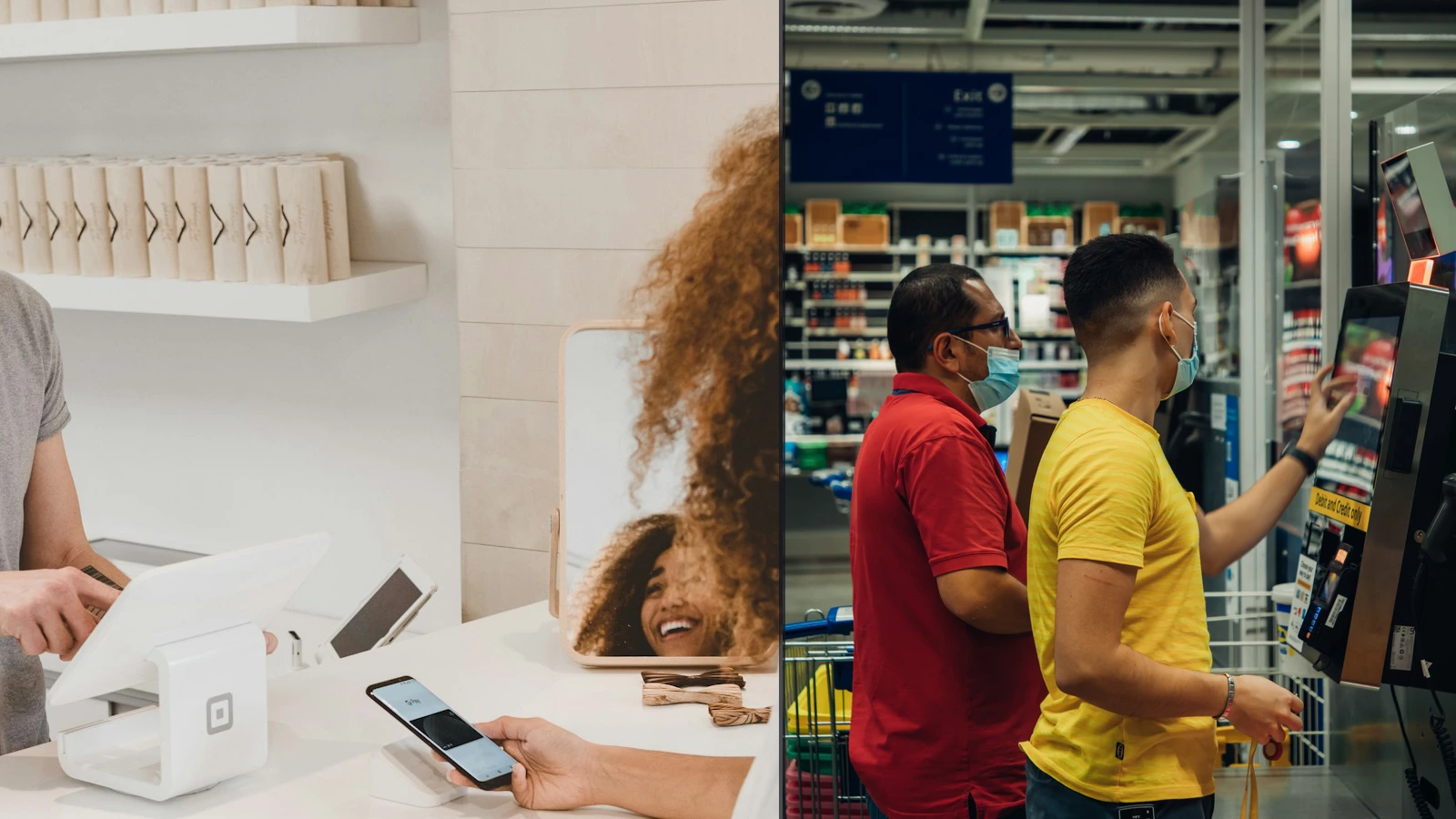
Brazil’s newly approved five-day workweek could change the supermarket faster than shoppers expect. Not because retailers have suddenly discovered self-checkout machines, but because the rules governing staffing, opening hours and labor coverage are about to change. A store that serves customers seven days a week must now plan for a different rhythm of paid work and rest. That makes technologies capable of reducing queues, monitoring inventory and building better schedules more relevant.
The provocative question is whether this reform will speed up automation faster than expected. Early signals from equipment manufacturers suggest strong demand, but they do not establish that the new law caused it. In fact, many retailers had been testing a five-day schedule and investing in digital tools long before the legislation was enacted. Understanding the difference between an existing trend and a new accelerator is essential for business owners, employees and international observers alike.
On October 16, 2026, Brazil promulgated Constitutional Amendment 141, replacing the standard six-days-on, one-day-off pattern known locally as escala 6×1 with a five-days-on, two-days-off framework (5×2), subject to the law’s transition and collective-bargaining provisions. The maximum weekly hours are scheduled to fall from 44 to 42 after 60 days and to 40 another 12 months later, without a salary cut. Agência Brasil’s English-language report provides an accessible account of that timetable.
Editorial analysis | October 21, 2026. This report combines official legislation, Brazilian industry data, published company accounts and clearly marked hypothetical calculations. It does not claim that self-checkout adoption is being driven exclusively by labor reform or that a particular number of jobs will disappear.
What Brazil’s new 5-day workweek actually changes
For readers outside Brazil, the distinction between the schedule and weekly hours matters. A 5×2 schedule means five working days followed by two days of weekly rest. A 40-hour workweek is the cap on normal weekly working time. These two features are related but not identical: employees can work five days without necessarily working only 40 hours, as some companies’ earlier pilot programs have demonstrated.
The new constitutional amendment sets a transition rather than an overnight switch. From roughly mid-December 2026, the five-day pattern with two weekly rest days and a maximum 42-hour week is due to apply under the new framework. Twelve months after that first reduction, the normal weekly limit reaches 40 hours. The text also addresses pay protection and the role of collective bargaining; specific arrangements should be reviewed against the applicable Brazilian legal provisions and collective agreements.
Why a retailer faces a harder scheduling puzzle
A supermarket may open early, close late and remain busy during weekends. Changing an employee’s calendar does not eliminate the demand for checkout assistance on Saturday, shelf replenishment on Monday morning or order fulfillment in the evening. Managers must find ways to distribute the necessary work across shorter individual schedules while preserving customer service.
This is particularly demanding for pharmacies, grocery chains, convenience stores, shopping centers and other businesses with long daily opening hours. Their options may include hiring and training, redesigning rosters, cross-training team members, adjusting store hours, improving workflows or automating carefully selected activities. Those choices have different economic and human consequences, and no one solution fits every store.
The hidden arithmetic: what happens to 10 employees’ available hours
Consider a hypothetical retail operation with 10 employees, each currently contracted for 44 hours a week. On paper, the team provides 440 scheduled hours. If headcount stays the same, the scheduled total drops to 420 hours at 42 hours per employee and to 400 at 40 hours. This simplified calculation excludes breaks, leave, variations in skills, employee absences and restrictions in specific jobs.
| Weekly limit per employee | 10 employees: total hours | Change from 44 hours |
|---|---|---|
| 44 hours | 440 hours | Baseline |
| 42 hours | 420 hours | 20 fewer hours |
| 40 hours | 400 hours | 40 fewer hours |
At the final stage, the difference equals one full 40-hour workweek in aggregate hours. It does not establish that a business must hire exactly one more person. A trained stockroom assistant cannot automatically replace a licensed pharmacy professional, and shifts may require different types of coverage. Some gaps can also be reduced through better operations or more predictable staffing.
Keeping monthly pay unchanged while reducing weekly hours also alters the arithmetic of labor cost per scheduled hour. If the same monthly pay is divided across 40 instead of 44 hours, the hourly equivalent is 10% higher (44 ÷ 40 = 1.10). That is not a forecast of a 10% increase in total payroll. Actual labor budgets depend on hiring, overtime, benefits, productivity, turnover and the design of the shifts.
Can better rest offset part of the operational pressure?
Potentially. A predictable two-day break may make positions more attractive and reduce fatigue. But management must actually measure absenteeism, training costs, turnover, customer experience and output rather than assuming gains. Some Brazilian chains reported improvements while running pre-reform 5×2 pilots, which makes the story more complex than a simple narrative of labor costs forcing machines into every aisle.
Self-checkout is the visible symbol, not the whole automation story
For many consumers, retail automation means a self-service checkout station: shoppers scan items and pay without using a traditional staffed lane. For businesses, the technology can increase throughput during certain periods, but it also needs attendants to assist customers, resolve technical issues, handle age-restricted products where applicable and prevent scanning mistakes or shrinkage.
Replacing four conventional lanes with self-checkout stations does not automatically make four cashiers redundant. A useful evaluation compares completed baskets per hour, average waiting time, intervention rates, losses and customer satisfaction. A store with many large baskets or complex produce purchases may have a different outcome from a city-center convenience shop serving people buying just a few items.
There is also an accessibility dimension. Some shoppers require assisted service; some prefer it; others may struggle with interface language or device failures. A digital-first strategy that removes help can create frustration and erode trust. Self-checkout should be examined as a service design decision, not merely a headcount calculation.
Four less obvious technologies that may gain importance
1. Digital staff scheduling and workforce planning
Scheduling systems can compare expected foot traffic with staffing capacity, identify uncovered shifts and flag potential overtime. Instead of building rosters entirely in spreadsheets, managers can model several scenarios. With different weekly hours approaching, the ability to test changes before they become operational problems may be more useful than installing an expensive new checkout lane.
The software’s results still need human review and compliance checks. Availability, rest rules, the right skills and collective agreements cannot safely be treated as disposable constraints just to make a staffing dashboard look efficient.
2. Inventory visibility and electronic replenishment
Barcode-based stock counts, mobile scanners, automated replenishment alerts and real-time sales integration can reduce time spent searching storage rooms or manually reconciling figures. The value comes from fewer errors and less rework. A small retailer that does not have reliable product records may benefit more from fixing basic inventory data than from adopting sophisticated machine-learning software.
3. Electronic shelf labels and price management
Pricing can be a labor-intensive part of operating a store. Linking price updates to electronic labels can reduce repetitive checks and mismatches between shelves and registers. But the cost of hardware, maintenance and integration makes the case vary by store size. Poor source data can still spread incorrect prices across an automated system.
4. Demand forecasting, online orders and picking tools
Digital tools can estimate busy periods, prioritize online orders and help organize stockroom picking routes. Used responsibly, they can free people for customer assistance or merchandising. Used poorly, they can encourage understaffing or introduce opaque performance monitoring. Owners should set clear success measures and disclose how worker data is handled.
The industry signal: a Brazilian self-checkout manufacturer doubled output
A report dated October 19, 2026 described expansion at Laurenti Elgin, a manufacturer in Diadema, São Paulo. According to the company figures quoted in that coverage, monthly production rose from approximately 800 to 1,600 self-checkout units, with roughly 3,000 orders on hand and lead times increasing. The figures indicate stronger demand for retail automation equipment, but they are company-reported and have not been independently audited for this article.
The headline temptation is obvious: labor rules change, and factories build more self-checkouts. However, a rapid equipment-production increase cannot have resulted entirely from an amendment promulgated just days earlier. Manufacturers plan capacity and process orders over months; retailers were already contending with staffing challenges, electronic payments, wage pressure and customer expectations. The more defensible reading is that the reform may add urgency to an established investment cycle.
The production report was republished by regional outlets; see the October 19 account of Laurenti Elgin’s output. Investors and business owners should distinguish a supplier’s reported production from verified sales, installed terminals and measured labor savings.
Brazilian retailers were testing 5×2 before the law
A May 2026 series by Folha de S.Paulo documented tests at Supermercados Pague Menos, RD Saúde and Savegnago. Managers described potential benefits involving recruitment, attendance and transport or meal expenses, alongside difficulties scheduling days off and maintaining service levels.
Savegnago is particularly instructive. The group adopted a five-days-on, two-days-off arrangement in several operations without reducing the 44-hour weekly total at that stage. Reports described greater applicant interest, but results across stores varied. In a later interview, company leadership said improved employee satisfaction and productivity were important and signaled that store opening hours would be reviewed as the 40-hour limit approached.
This case shows why researchers should not collapse three separate changes into one statistic: changing the number of workdays, reducing weekly hours and introducing automation each affect operations differently. Brazil now provides an opportunity to observe how businesses combine them, but credible assessments require before-and-after data over time.
What Brazil’s supermarket association reveals about the wider shift
The Brazilian Supermarket Association (ABRAS) portrays food retail as a large, diversified industry with hypermarkets, cash-and-carry stores, neighborhood outlets and digital channels. Its 2026 operational-efficiency survey reported a relative efficiency gain of 10.05% among companies included in a comparison of consecutive survey waves, while also showing uneven outcomes.
These findings matter because the business case for automation does not begin or end with staffing. Loss prevention, inventory accuracy, basket size, store formats and the cost of serving online orders influence capital decisions. Managers who focus exclusively on labor-hours saved can miss larger sources of waste or overlook ways that better employee conditions may improve service.
Will automation replace Brazilian retail workers?
There is no trustworthy, reform-specific number establishing how many jobs might be created or lost because of this amendment. Self-checkout can change the mix of tasks: fewer minutes scanning repetitive baskets, more time resolving exceptions, supervising stations, restocking, supporting older customers or troubleshooting systems. Other technologies may increase demand for maintenance and systems expertise.
Some stores may seek to reduce staffing needs; others may hire additional workers or grow sales as processes improve. Both claims are plausible, and both need evidence. A balanced account should respect the reform’s intended benefit of more rest while examining real operational costs and different adaptation strategies. The issue is not a predetermined contest between workers and machines.
A practical 90-day checklist for small retailers
Map demand before choosing a technology
Track how many customers arrive during each part of the day, average queue times, common reasons for refunds and the hours spent on replenishment, receiving deliveries and closing the register. These observations establish a baseline. If a bottleneck happens for only 90 minutes per day, staffing or opening-hour adjustments may outperform a costly new machine.
Build separate staffing scenarios for 42 and 40 hours
Calculate the labor coverage needed by role and time of day, and compare it with the hours available under each stage of the new rules. Budget for training and planned leave, and have a Brazilian labor professional examine applicable collective agreements. Do not assume an international workforce-software template automatically conforms to local law.
Compare three real alternatives before buying
Test process changes, recruitment or cross-training and selected automation against the same metrics. Include installation, support, transaction fees, maintenance, connectivity, privacy obligations and expected equipment life in the technology budget. A system that reduces labor but raises shrinkage or service complaints may not create genuine value.
Start with a limited pilot and publish internal results
Run a digital roster for one store or deploy a supervised self-checkout station for a controlled period. Compare queue length, completed purchases, intervention rate, staff feedback and overall operating costs before and after the change. Use the same days and comparable store conditions. Expansion should follow evidence, not fear of being left behind.
An alternative viewpoint: the biggest gain may come from better work, not fewer workers
Retailers often associate productivity with automation, but employees who remain longer, learn products and understand their customers can generate value that is difficult to capture in a terminal-level transaction metric. Predictable time off may support retention and reduce fatigue, while cross-training can increase flexibility without assuming longer individual working weeks.
That possibility is especially important in specialty retail and neighborhood stores, where personal attention influences loyalty. The strongest operations may combine assisted self-checkout with better human service, rather than attempt to eliminate interaction. Technology should be tested against customer needs and employee experience together.
What international retailers and investors should watch next
Brazil’s reform offers an unusual natural experiment for retail operations. Five indicators deserve ongoing attention: the pace of actual schedule adoption; the number of stores expanding self-checkout fleets; changes in equipment lead times and installation rates; employee retention and overtime costs; and customer experience after the transition. One set of indicators without the others can produce misleading conclusions.
A rise in hardware orders during late 2026 might reflect the new law, but it could also reflect projects approved earlier. Similarly, a rise in productivity at one supermarket may come from a scheduling redesign that predates the reduction to 40 hours. Causal claims should be based on evidence that separates these factors, ideally across retailers with different operating models.
The business lesson: calculate before you automate
A simple, hypothetical example captures the management trade-off. If a stock-counting system saves 30 minutes of repetitive work per day across 26 operating days, it frees 13 hours per month for other tasks. Those are hours of staff capacity, not an automatic reduction of 13 paid hours or a promise of financial return. Whether that change is worth the investment depends on the software cost, accuracy gains and how the saved time is used.
A practical evaluation compares the total cost of ownership with measurable benefits over a reasonable period. For cash flow, small retailers can consult our English guide to working capital; for merchandising decisions, see which products really make money in a retail store. Technology budgets are part of the entire operation, not a separate gadget purchase.
The bottom line
Brazil’s five-day workweek is a meaningful labor reform and a new planning challenge for stores that must serve customers beyond their employees’ individual shifts. Digital rosters, stock management, electronic labels and assisted self-checkout can help retailers adjust. The emerging demand for automation is real, but the claim that this particular law has already driven all of it would be misleading.
The most revealing change might happen behind the scenes: a supermarket that makes its schedule more predictable, keeps shelves stocked and improves customer service while respecting shorter workweeks. For business owners, the better question is not “How many employees can a machine replace?” but “Which tasks need to become simpler for the new workweek to succeed?” Have you noticed more self-checkout stations or changes to store service hours in Brazil?
Sources, reporting notes and author
Primary source: Constitutional Amendment No. 141 of October 16, 2026. Timeline: Agência Brasil (English) and Senate News Agency. Sector context: ABRAS 2026 efficiency research, Folha, May 8, 2026 and automation-production reporting, October 19, 2026. Illustrative staffing calculations are editorial models, not employer-specific forecasts.
By João Victor Lucas, founder and editor of Tendências Centrais, which covers Brazilian business, management and technology for entrepreneurs. This is an independent editorial analysis of publicly available information and does not replace advice from a Brazilian employment-law professional.
Frequently asked questions
Has Brazil already approved the five-day workweek?
Yes. Constitutional Amendment 141 was promulgated on October 16, 2026. It introduces a five-day workweek with two weekly rest days under a staged transition and includes provisions for collective bargaining.
When does Brazil’s maximum weekly working time fall to 40 hours?
The official transition moves first from 44 to 42 weekly hours after approximately 60 days, with the 40-hour cap following another 12 months later. The overall transition takes approximately 14 months from promulgation.
Does a 5×2 schedule always mean 40 hours of work?
No. The workdays and the weekly total are separate concepts. Some retailers trialed a five-day roster before the reform while retaining 44 weekly hours.
Does the new law require self-checkout machines?
No. It establishes working-time and rest rules, not a technology requirement. Automation is one operational option retailers may consider.
Will the law automatically increase supermarket payroll by 10%?
No. At unchanged pay, moving from 44 to 40 scheduled hours raises the equivalent cost per hour by 10% as a mathematical comparison. Actual payroll and total operating costs will vary with staffing, productivity and scheduling.
Will Brazilian stores stop employing cashiers?
There is no evidence supporting a nationwide prediction of that kind. Self-checkout changes tasks and still needs assistance; labor-market effects depend on each retailer’s strategy.
What should a small shop automate first?
Start with measured problems, often inventory accuracy or staff rostering, before spending on sophisticated checkout hardware. Evaluate total costs and run a small pilot.